There are two great lost fossil sites in the Twin Cities area. (The Brickyards don't count; they're not lost, they just aren't open to collection.) One is the Johnson Street Quarry, where workers cut into a bed in the Hidden Falls Member of the Platteville Formation that had unusually abundant echinoderms. As described in Sloan et al. 1987: 200, "Sardeson mined out a spot in this unit in the old Johnson Street Quarry in Minneapolis (now filled with garbage, and covered with Interstate 35) that produced about 20 specimens of the starfish Protopalaeaster narrawayi, several specimens of the crinoid Cremacrinus arctus (Fig. 16.2), edrioasteroids, cystoids, brachiopods, bryozoans, molluscs, and graptolites." This is slightly out of date; instead of a dump, there's now a Quarry Shopping Center with a Cub Foods, Home Depot, and Target, although even with all those options you can't get an edrioasteroid there anymore. Regardless of the exact character of the overburden, it seems unlikely that anyone will be doing any paleontological follow-up there anytime soon. The other locality is the Afton graptolite locality in the St. Lawrence Formation. We already had a post on why this locality was important; what I'm curious about is where exactly it was. A locality, even if "lost", had to have been *somewhere*, and apart from the scientific and historic interest, there very well could be similar fossils in rocks nearby. Indeed, Hughes and Hesselbo (1997) reported graptolites in the lowest strata of the St. Lawrence Formation in their Afton section, where collection may have postdated the road work that destroyed the classic location. For some reason, despite its “classic” nature, nobody ever saw fit to just put a pin on the map. What clues do we have?
Sunday, March 22, 2026

Thursday, October 30, 2025
Hyoliths VII: The New Blood
Have you ever been working on some mundane task when you suddenly wondered about the latest news from the world of hyoliths? Taking a walk, or merging onto a busy highway, or applying shampoo in the shower? All right, probably not, but if so, we're here for you!
Appropriately for this time of year, we have some news of hyoliths meeting or escaping grisly demises. (Or not, but that's taphonomy for you.) Kraft et al. (2023) published on an exceptionally well-preserved specimen of the Middle Ordovician central European trilobite Bohemolichas incola, including gut contents. The hyoliths are only a small part (quite literally!) of the story, which is well worth checking out if you have any interest in trilobites. The small trilobite (on the order of 35 mm or 1.4 inches long) apparently ate every darn thing it could fit in its mouth that wasn't putting up too much of a fight, including tiny hyoliths, ostracodes, stylophoran echinoderms, and chunks of shells.

|
| The trilobite in question (Figure 1 from Kraft et al. 2023; scale bar 10 mm or 0.4 inches). Hyolith bits are in purple, including one recognizable shell under the trilobite's pygidium (tail segment). CC BY 4.0. |
Paleozoic examples of the bilobed trace fossil Rusophycus are often attributed to resting trilobites, and one of the things you can do when you're not moving is pick up a snack. Lee et al. (2025), in a description of Cambrian Rusophycus from China, included an example where the trace was associated with hyolith shells. Unlike classic Rusophycus, thought to occur at the seafloor surface, this example was interpreted as a burrow. Also unlike classic trilobite predation trails, in this case the food had a hard shell. The trace-maker is thought to have been scavenging for hyoliths that had been transported from elsewhere.
Returning to the Ordovician of central Europe, we find a hyolith that was not eaten, although not from lack of trying. Fatka et al. (2023) reported a specimen of Elegantilites custos with healed damage in the form of scratches on its operculum. The culprit in this case is thought to have been an echinoderm, possibly an ophiuroid (brittle star) trying to get in.
Perhaps you'd prefer to think of your hyoliths more in terms of a grand and proud lineage, rather than delicious treats for every passing trilobite and brittle star. If so, Liu et al. (2024) have an analysis of Cambrian hyoliths for you. Using all valid Cambrian genera (N=115), they considered a set of 20 morphological characteristics over time and space. Overall hyolith taxonomic diversity peaked in Series 2 of the Cambrian (roughly speaking, the time when trilobites appeared and therefore kind of like the old "Early Cambrian"). They then keeled over sharply and were at lower levels for much of the rest of the Cambrian, locally reviving to a certain extent in the Early Ordovician. Their decline may have been due to an ocean anoxic event (the Sinsk Event) around 513 to 508 million years ago. The two major wings of hyoliths, the hyolithids (the kind with helens and complex opercula; filter feeders?) and orthothecids (the kind without helens and with simple opercula; deposit feeders?), did not follow the same curves: the orthothecids peaked sooner and felt the bite sooner, whereas the hyolithids didn't really get started until Series 2 and actually peaked just after it before suffering their drop. Morphological diversity was greatest in Series 2, although granted hyoliths had a somewhat limited repertoire.

|
| The curve of Cambrian hyoliths. Figure 1 in Liu et al. (2024). CC BY 4.0. |
References
Fatka, O., M. Valent, and P. Budil. 2023. The first healed injury in a hyolith operculum. The Science of Nature 110(50). https://doi.org/10.1007/s00114-023-01879-0.
Kraft, P., V. Vaškaninová, M. Mergl, P. Budil, O. Fatka, and P. E. Ahlberg. 2023. Uniquely preserved gut contents illuminate trilobite palaeophysiology. Nature 622: 545–551. https://doi.org/10.1038/s41586-023-06567-7.
Lee, D.-C., M.‑K. Oh, Y. Zhang, X.‑L. Zhang, J.‑H. Lee, K. Liang, and W. Li. 2025. Two new probable feeding traces of Rusophycus from the Cambrian of China: tracemaker’s behavior and formation mode. Geosciences Journal 29: 1–17. https://doi.org/10.1007/s12303-025-00007-6.
Liu, F., T. P. Topper, L. C. Strotz, Y. Liang, Y. Hu, C. B. Skovsted, and Z. Zhang. 2024. Morphological disparity and evolutionary patterns of Cambrian hyoliths. Papers in Palaeontology 10(2). https://doi.org/10.1002/spp2.1554.
Saturday, August 2, 2025
Going up (and down!) in section, southeastern Minnesota
I was recently on a trip to southeastern Minnesota for several days. While there, inevitably I ended up with some geological photos. I must confess that I've never spent any time down here outside of passing through, and this was actually the first occasion I'd spent any time above the Cummingsville, so it was nice to see the overlying units I'd only read about before. If you'd like to know what we're up against, I recommend the Minnesota Geological Survey's geologic atlas of Fillmore County (the trip wasn't entirely in Fillmore County, but you'll get the idea).
Sunday, April 27, 2025
Arcola Bluffs Day Use Area
It's been a good while since our last St. Croix post, hasn't it? I wanted to let you in on a fun place I recently visited for the first time; Arcola Bluffs Day Use Area. This site is not widely known; there's this article (with much more artistic photos than my own), an NPS cultural landscape assessment from 2018 that weighs in at 204 mb (NPS 2018; absolutely worth it if you want a thorough understanding of the site, and also includes a section on Fairy Falls), and then some short pieces here and there, and that's about it. Visiting it, though, you'll discover great geology, views of the river and the historic Soo Line High Bridge, forest and prairie settings, and some evocative ruins.
Monday, March 20, 2023
Brooksella: what are star cobbles?
Back in the far-off year of 2012, when I was helping to compile instances of paleontological type specimens found in National Park Service units, we had to make decisions about various edge cases. One of these was how to handle names for what later turned out to be pseudofossils. We decided to record the information as historically relevant but did not include the "taxa" in any counts. On this blog we've actually covered a couple of them already, "Lingula calumet" and "Paradoxoides barberi" from within or very near Pipestone National Monument. Another is "Brooksella canyonensis", a putative jellyfish from the Proterozoic Nankoweap Formation of Grand Canyon National Park. It was first reported as such in Van Gundy (1937) and then named, not entirely enthusiastically, in Bassler (1941). "B. canyonensis" has fared poorly as a jellyfish, but has had its supporters as an organic feature (e.g., Glaessner 1969; Kauffman and Steidtmann 1981; Kauffman and Fursich 1983; tentatively Ciampaglio et al. 2006). However, I favor an inorganic interpretation. Admittedly, there are several to choose from: gas-escape structures or compaction (Cloud 1968), "sand-volcano"-type fluid escape (Ford and Breed 1977; Ford 1990), and mud rolls (Fedonkin and Runnegar 1992).
"B. canyonensis" was not the first species in the genus Brooksella, though. Brooksella was named by Charles Walcott for "star cobbles" from the Coosa Valley of Alabama (Walcott 1896), now attributed to the middle Cambrian-age Conasauga Formation (Nolan et al. 2023). In fact, he named three taxa for different forms of cobbles: B. alternata, B. confusa, and Laotira cambria (Walcott 1896). Star cobbles got their name because at their best they look like the stereotypical twinkly pointed things you might doodle. Some of them even have five rays, although six is more typical and they are more lobed than pointed, so it's not a perfect match.

|
| Brooksella (A–D, K) and Laotira (E–H, J) as illustrated by Walcott (1898) and reproduced as Figure 1 in Nolan et al. (2023) (which see for full caption). CC BY 4.0. |
Walcott interpreted the objects as representing jellyfish, which are probably not the first thing you think of when fossils come to mind, but jellyfish fossils are in fact known elsewhere. In this case, though, the interpretation hasn't proved tremendously popular over time, and numerous alternatives have been proposed. These alternatives, though, generally involve some kind of organic origin, either as a true body fossils or a trace fossil of some sort. It's not hard to see why: they look like something that *ought* to be organic, even if the identity of that something is unclear. (Anyone who has gone out fossil hunting will probably recognize this feeling. Sometimes you're right, sometimes you're wrong.)
Nolan et al. (2023) have published a detailed reassessment of Alabama Brooksella. As part of it, they prepared a lovely supplemental figure of various hypotheses, with thumbnail evaluations (discussed at greater length in the text). (*Warning*: Hold off on clicking the link if you'd rather not get their solution immediately.) Studies of Brooksella from the past couple of decades have interpreted it as a trace fossil (either a feeding burrow or a coprolite) or a glass sponge (hexactinellid). Nolan et al. subjected star cobbles to about as many tests as can legally be done to rocks in their analysis of the various possibilities, and came to several conclusions, including:

- Brooksella specimens do not have a sponge's anatomy. There aren't spicules, features previously interpreted as ostia (pores) bear a strong resemblance to pitting left behind when lichen are cleaned off, and lobes do not feature opening at their ends for radial canals (which were also not found).
-
The orientation of the specimens when found in situ was with the putative
central osculum (excurrent vent) down in the sediment, which is an
inconvenient place for an osculum. Furthermore, many examples did not even
have an "osculum".
-
The specimens include internal voids and tubes, but these spaces do
not correspond to the external form, unlike primary burrows (although this
does not preclude the specimens having "captured" parts of burrows that were
passing through). Furthermore, the internal features do not include common
burrowing structures such as backfill.
-
The specimens have the same composition as silica concretions from the same
rocks, and are very comparable overall, with the same kind of weathering
rings, lichen pitting, and random internal voids and tubes.
Nolan et al. concluded that Brooksella is no different from the local concretions except for the lobes, and should therefore "be considered a pseudofossil until proven otherwise." A consequence of this conclusion is that Brooksella, not being a glass sponge, would not have been a source of silica for preservation of fossils in the Conasauga. (It's not stated, but it seems that it would have been a sink instead.) It further goes to show that you shouldn't trust strange things in the Cambrian.

|
| Brooksella (A–E) and concretions (F–K) collected from the Conasauga Formation by Nolan et al. (scale bar 1 cm, or 0.4 in); Figure 5. CC BY 4.0. |
References
Bassler, R. S. 1941. A supposed jellyfish from the pre-Cambrian of the Grand Canyon. Proceedings of the United States National Museum 89(3104):519–522.
Ciampaglio, C. N., L. E. Babcock, C. L. Wellman, A. R. York, and H. K. Brunswick. 2006. Phylogenetic affinities and taphonomy of Brooksella from the Cambrian of Georgia and Alabama, USA. Palaeoworld 15:256–265.
Cloud, P. E., Jr. 1968. Pre-metazoan evolution and the origins of the Metazoa. Pages 1–72 in E. T. Drake, editor. Evolution and environment. Yale University Press, New Haven, Connecticut.
Fedonkin, M. A., and B. N. Runnegar. 1992. Proterozoic metazoan trace fossils. Pages 389–395 in J. W. Schopf and C. Klein, editors. The Proterozoic biosphere: A multidisciplinary study. Cambridge University Press, Cambridge, United Kingdom.
Ford, T. D. 1990. Grand Canyon Supergroup: Nankoweap Formation, Chuar Group, and Sixtymile Formation. Pages 49–70 in S. S. Beus and M. Morales, editors. Grand Canyon geology. Oxford University Press, New York, New York.
Ford, T. D., and W. J. Breed. 1977. Chuaria circularis Walcott and other Precambrian fossils from the Grand Canyon. Journal of the Palaeontological Society of India 20:170–177.
Glaessner, M. F. 1969. Trace fossils from the Precambrian and basal Cambrian. Lethaia 2(4):369–393.
Kauffman, E. G., and F. Fursich. 1983. Brooksella canyonensis: A billion year old complex metazoan trace fossil from the Grand Canyon. Abstracts with Programs - Geological Society of America 15(6):608.
Kauffman, E. G., and J. R. Steidtmann. 1981. Are these the oldest metazoan trace fossils? Journal of Paleontology 55:923–947.
Nolan, M. R., S. E. Walker, T. Selly, and J. Schiffbauer. 2023. Is the middle Cambrian Brooksella a hexactinellid sponge, trace fossil or pseudofossil? PeerJ 11:e14796. doi:https://doi.org/10.7717/peerj.14796.
Van Gundy, C. E. 1937. Jellyfish from Grand Canyon Algonkian. Science 85(2204):314.
Walcott, C. D. 1896. Fossil jelly fishes from the Middle Cambrian Terrane. Proceedings of the United States National Museum 18:611–614.
Walcott, C. D. 1898. Fossil Medusæ. U.S. Geological Survey, Washington, D.C. Monograph 30.
Sunday, October 23, 2022
Abbott and Costello Meet the Hyolith
I seem to have missed doing a hyolith post last year, which is really a shame and is all on me. Honestly, where else are you going to get the latest information on hyoliths? Social media? Cable news? Public radio? No, of course not! This is really a public service I'm running here, and you'll thank me for it someday. With that out of the way, what's been going on in the world of hyoliths over the past couple of years? A few thoughtfully curated highlights:
If you've ever spent time looking at the origins and relationships of gastropods, you'll be familiar with the seemingly endless debates about whether such-and-such is a gastropod or something that just happens to have a shell that looks like a snail shell (like monoplacophorans, helcionelloids, and maybe bellerophonts). We've had a bit of that with the local snail-oids, although by the Late Ordovician most of the hard cases had been cleared out. Down in the Cambrian things are more complicated. One example is Protowenella, an itty-bitty (smaller than 1 mm long) shell thing that looks kind of like a Phrygian cap. (Okay, fine, it looks like an exaggerated Smurf hat.) Is it a gastropod, a monoplacophoran, or a helcionelloid? According to Peel (2021), it is none of these. Instead, it is... a hyolith.
(Admittedly, the surprise you are feeling is probably tempered by the fact that this is a post about hyoliths, so it wouldn't have made sense for it to be a chiton or graptolite or something.)
Peel based his conclusion on the presence of a bilaterally symmetric operculum
(a mineralized cap that covers the shell aperture) with features
consistent with a hyolith origin. Gastropods frequently have opercula, but
they aren't symmetric, and hyoliths are the only thing known to have had
opercula in the Cambrian. If this referral is accurate, it would be something of an
unexpected expansion of hyolith morphological talents. Hyoliths, of course,
are famous for having long triangular shells with triangular cross-sections,
whereas Protowenella as mentioned looks like a curled-over pointed hat.
Now let's turn from something that doesn't look like a typical hyolith but has
something that *is* typical, to something that looks like a typical hyolith
but is missing something expected. Hyoliths are generally divided into two
groups, the orthothecids and hyolithids. Orthothecids showed up first and have
a flat, retracting operculum (rather than the more complex operculum of
hyolithids) and no helens (the paired spiny appendages that make hyolithids
look kind of like they have wide spindly mustaches). It turns out that there
are some hyoliths with hyolithid anatomy except for no helens. Liu et al.
(2022) examined one such example, "Ambrolinevitus" ventricosus,
an early Cambrian form from China (which they moved to Paramicrocornus,
also known to lack helens). The implication is that the hyolithid body shape
evolved before helens. Therefore, whatever ecological specialization was held
by hyolithids over their earlier cousins, it was underway before helens
appeared.
References
Liu, F., C. B. Skovested, T. P. Topper, and Z. Zhang. 2022.
Hyolithid-like hyoliths without helens from the early Cambrian of South
China, and their implications for the evolution of hyoliths. BMC Ecology and Evolution 22: article 64. doi:10.1186/s12862-022-02022-9.
Peel, J. S. 2021. In-place operculum demonstrates that the Middle Cambrian Protowenella is a hyolith and not a mollusc. Alcheringa: An Australasian Journal of Palaeontology 45(4):385–394. doi:10.1080/03115518.2021.2004225.
Sun H., Sun Z., and Zhao F. 2021. Exceptionally preserved hyolithids from the middle Cambrian of north China. Geological Magazine 158(11):1951–1959. doi:10.1017/S0016756821000510.
Sunday, March 20, 2022
The Grand Pitch Formation
Back in October I posted on a formation I saw in Maine, the Matagamon Sandstone. While going through my photos, I realized I had a number of scenic and interesting shots of another formation, also not widely known: the Grand Pitch Formation.

|
|
Comes with waterfalls! |
The Grand Pitch Formation goes back in the literature to the 1930s, when it was known as the Grand Falls Formation (Ruedemann and Smith 1935). This name, though, was already in use, so the more specific Grand Pitch name was substituted (Neuman 1962). The name refers to the Grand Pitch, a waterfall on the East Branch of the Penobscot supported by more resistant beds of the formation.

|
|
Resistant beds like these. |
If you've taken a historical geology class in North America, you've probably spent some time with the assembly of eastern North America. Back when I was taking that class, it was a three-stage process marked by the Taconic, Acadian, and Alleghanian (or Appalachian) mountain-building events (orogenies). Well, as you might guess, it's a bit more complicated than that. (Just a bit.) In actual practice, the North American craton, microplates, continental fragments, island arcs, and all and sundry were bumping and jostling and colliding with each other all the time. In the present example, the Grand Pitch Formation was deposited not in North America, but on a Gondwanan terrane known as Ganderia (or Gander) that eventually piled up on the continent after a series of its own adventures (including running into another terrane) (Neuman and Max 1989).

|
|
Just like our slice of the Equator in Minnesota, here in Maine you can
stand on a former sliver of the tropics. |
The Grand Pitch Formation is a heterogeneous unit, including beds of gray, green, and red siltstone and slate, quartzite, and minor amounts of graywacke and tuff (Neuman 1967). Siltstone and slate are charming lithologies but are not noted for resistance to weathering; instead, the falls are supported by quartzite beds. The depositional environment has been interpreted as a continental slope-rise setting (Wellensiek et al. 1990).

|
|
Finer-grained beds as seen at the surface: not recommended for load-bearing
outcrops. |
It's a pretty thick formation, encompassing at least 1,500 m (5,000 ft) (Neuman 1967), but it's not in mint condition, to say the least. The formation has undergone several episodes of deformation, going back to the Ganderia days with a Cambrian–Ordovician event termed the Penobscot Orogeny or Disturbance (Neuman and Max 1989).

|
|
Red and gray beds make it easy to see minor faulting here. |
The age of the Grand Pitch Formation is not entirely clear. Only one kind of
fossil has ever been reported from it, the invertebrate trace fossil
Oldhamia, which looks kind of like a fireworks burst or a palm frond
and is thought to have been produced by something "mining" beneath microbial
mats (Seilacher et al. 2005). Oldhamia was most abundant in the early
Cambrian, but is not limited to that time frame, nor does its occasional
presence mean the entire Grand Pitch Formation has to be that age, either
(Neuman 1962, 1967). Generally the formation is attributed to some interval of the Cambrian.

|
|
Going back to deformations and alterations, here we have a patch of the
formation scored with glacial striations. |
References
Neuman, R. B. 1962. The Grand Pitch Formation: new name for the Grand Falls Formation (Cambrian?) in northeastern Maine. American Journal of Science, series 5, 260:794–797.
Neuman, R. B. 1967. Bedrock geology of the Shin Pond and Stacyville quadrangles, Penobscot County, Maine. U.S. Geological Survey, Washington, D.C. Professional Paper 524-I.
Neuman, R. B., and M. D. Max. 1989. Penobscottian-Grampian-Finnmarkian orogenies as indicators of terrane linkages. Pages 31–45 in R. D. Dallmeyer, editor. Terranes in the circum-Atlantic Paleozoic orogens. Geological Society of America, Boulder, Colorado. Special Paper 230.
Ruedemann, R., and E. S. C. Smith. 1935. The Ordovician in Maine. American Journal of Science, series 5, 30:353–355.
Seilacher, A., L. A. Buatois, and M. G. Mángano. 2005. Trace fossils in the Ediacaran–Cambrian transition: behavioral diversification, ecological turnover and environmental shift. Palaeogeography Palaeoclimatology Palaeoecology 227(4):323–356.
Wellensiek, M. R., B. A. van der Phijm, R. Van der Voo, and R. J. E. Johnson. 1990. Tectonic history of the Lunksoos composite terrane in the Maine Appalachians. Tectonics 9(4):719–734.
Sunday, October 31, 2021
Barn Bluff
One of the outstanding geological sites in southeastern Minnesota is Barn Bluff (He Mni Can to the Dakota, La Grange to the early French explorers*) in Red Wing. The bluff is a bedrock island oriented roughly east–west, adjacent to the Mississippi River just above the Lake Pepin section. If you were to have gone back to the early postglacial period, it would have been a literal island thanks to meltwater filling the Mississippi River valley.
*All of the names are kind of prosaic, actually. "He Mni Can" is "hill, water, wood", "La Grange" or "Lagrange" is "the barn" for its general shape, and the English name is just a translation of the French.

|
|
The view of the south side of the west end. Observant eyes may notice
that the color of the lower outcrops change near the left side of the picture,
from orangish on the left to banded green on the right. Read on for
why! |
Sunday, July 11, 2021
The Short Life and Unnecessary Death of the Devils Lake Formation
Edward Oscar Ulrich was previously featured here as one of the main players in the brachiopod noir "The Great Brachiopod Caper of 1892", on the side of the "victors". Decades later, though, he seems to have come out on the short end with a formation he named from one of the more geologically notable areas in Wisconsin: Devil's Lake in the Baraboo Range. Devil's Lake itself is more than worthy of a post in its own right, but for the moment I'll just plant that seed for future reference.
A brief bit of exposition is in order, though. The Baraboo Range is an exhumed area of early Paleozoic topography, with a core of Proterozoic Baraboo Quartzite. The range is elliptical and oriented east-west, with a north range and a more complete south range; during the Cambrian and Early Ordovician, before it was buried, the range was oriented north-south instead of east-west. Similar to Taylors Falls, where basalt withstood the advancing seas, the ancient quartzite of the Baraboo Range formed islands in the Cambrian sea. Also like Taylors Falls, there is a conglomeratic sandstone that formed adjacent to the resistant Precambrian rocks, only in this case the conglomerate is composed of material shed from Baraboo Quartzite rather than Midcontinent Rift basalt. It is this flanking sedimentary unit, well-exposed near Devil's Lake, that Ulrich named the Devils Lake Formation.
The Devils Lake Formation first popped up in Ulrich (1920), as a name in a table. It did not get a proper description until Thwaites (1923), where it was described as a "more or less glauconitic sandstone" with quartzite pebble conglomerate. Ulrich (1924) added a little more, emphasizing the well-developed conglomerate found on the flanks of the quartzite ridges and noting its presence in nearby Parfrey's Glen. Never the subject of much discussion, the Devils Lake Formation was laid to rest in the literature following Wanenmacher et al. (1934). The authors regarded the formation as a geological chimera, because it was not coherent in terms of biostratigraphy. (It was also mixed up in Ulrich's doomed effort to establish the Ozarkian and Canadian periods between the Cambrian and Ordovician, which didn't help its reputation.) In light of the push to define formations by their rocks rather than their fossils that came about not long after Wanenmacher et al. (1934), this is a fatally flawed argument: formations live or die on the distinctiveness of their lithology, not because of how many trilobite zones they span. The Devils Lake Formation should have been expected to span multiple zones, because it represents unusual depositional conditions that persisted adjacent to the range beginning with the arrival of the Cambrian seas until the range was buried during the Ordovician. However, going back and resurrecting the Devils Lake Formation was not a high priority for anyone.
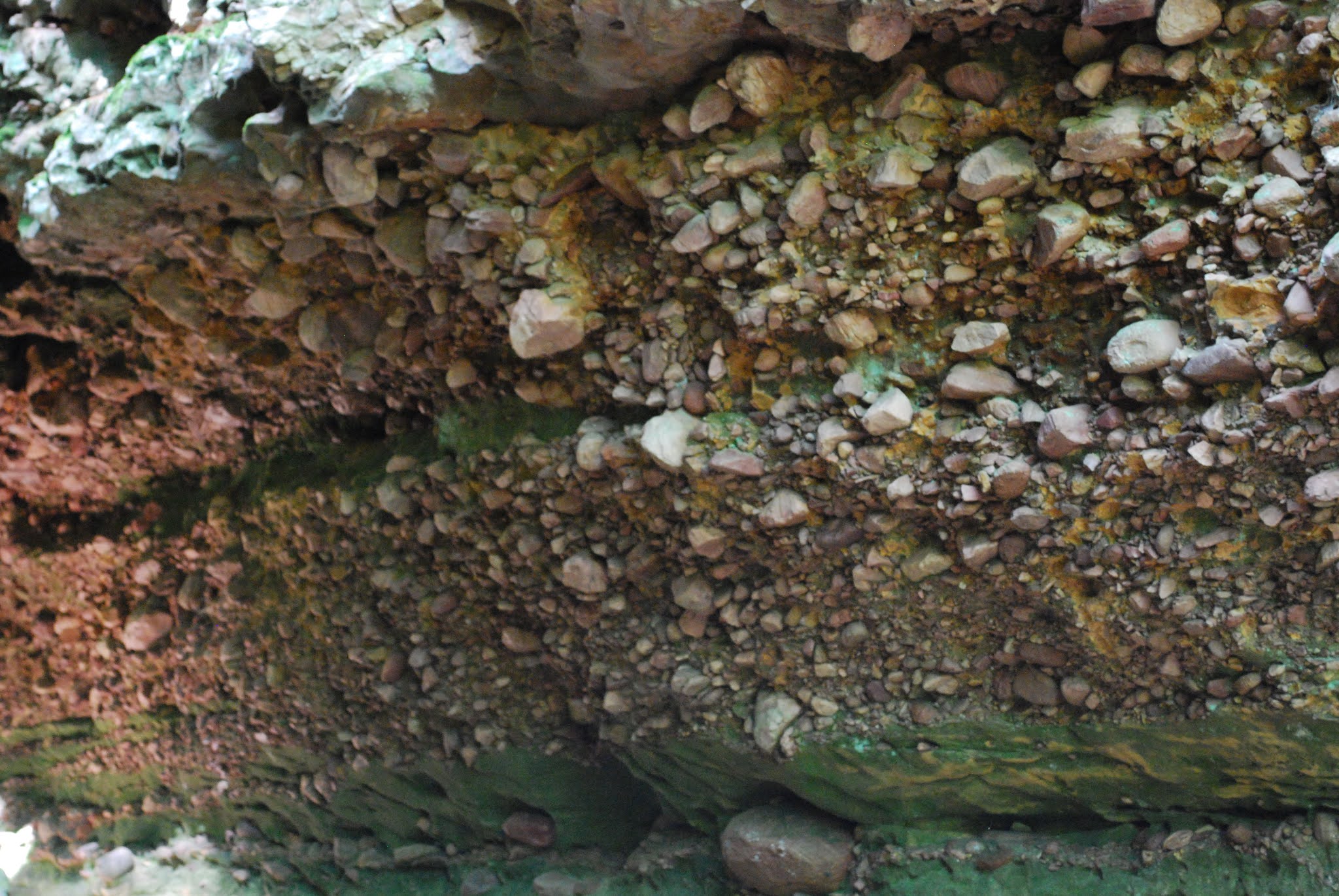
The plot thickened when in 1990 Clayton and Attig named a new formation, the Parfreys Glen Formation, for quartzite conglomerate and conglomeratic sandstone found adjacent to the quartzite ridges of the Baraboo Range. The new unit encompasses the same kinds of rocks as the Devils Lake Formation and is present in the same areas. It is hard to avoid the conclusion that the Parfreys Glen Formation is the Devils Lake Formation under a new name. Oddly, even though all of the papers mentioned above are referenced several times in the 1990 publication, nowhere is the term "Devils Lake Formation" used, not even to dismiss it. (This is not the only example of something about Devil's Lake geology going missing; for some reason the Cambrian fossils found near the lake are basically absent from the literature since Resser 1942. For a further "devilish" aspect, no two geologic maps of the area map the Cambrian rocks in exactly the same places around the lake; compare Wanenmacher 1932 [in Raasch 1935], Dalziel and Dott 1970, Clayton and Attig 1990, Baumann and Abrams 2013, and Stewart and Stewart 2021.)
 |
| Conglomerate in Parfrey's Glen; is it the Parfreys Glen Formation, or the Devils Lake Formation in disguise? Found on Wikimedia Commons, taken by user Wackybadger. CC BY-SA 3.0. |

References
Baumann, S. D. J., and M. J. Abrams. Geologic map of Devils Lake, Sauk County, Wisconsin, United States, T11N R6E and R7E. Midwest Institute of Geosciences and Engineering, Chicago, Illinois. Publication M-072013-1A. Scale 1:12,000.
Clayton, L. and J. W. Attig. 1990. Geology of Sauk County, Wisconsin; with a section about the Precambrian geology by B. A. Brown and an appendix naming the Rountree Formation by J. C. Knox, D. S. Leigh, and T. A. Frolking. Wisconsin Geological and Natural History Survey, Madison, Wisconsin. Information Circular 67. Including geologic map, scale 1:100,000.
Dalziel, I. W. D., and R. H. Dott, Jr. 1970. Geology of the Baraboo District, Wisconsin: a description and field guide incorporating structural analysis of the Precambrian rocks and sedimentologic studies of the Paleozoic strata. Wisconsin Geological and Natural History Survey, Madison, Wisconsin. Information Circular 14. Scale 1:62,500.
Raasch, G. O. 1935. Paleozoic strata of the Baraboo area. Kansas Geological Society, 9th Annual Field Conference Guidebook:405–415.
Resser, C. E. 1942. Fifth contribution to nomenclature of Cambrian fossils. Smithsonian Miscellaneous Collections 101(15).
Stewart, E. K., and E. D. Stewart. 2021. Geologic map of the Baraboo 7.5-minute quadrangle, Sauk County, Wisconsin. Wisconsin Geological and Natural History Survey, Madison, Wisconsin. Open-File Report 2021-02. Scale 1:24,000.
Thwaites, F. T. 1923. The Paleozoic rocks found in deep wells in Wisconsin and northern Illinois. The Journal of Geology 31(7):529–555.
Ulrich, E. O. 1920. Major causes of land and sea oscillations. Journal of the Washington Academy of Sciences 10(3):57–78.
Ulrich, E. O. 1924. Notes on new names in table of formations and on physical evidence of breaks between Paleozoic systems in Wisconsin. Transactions of the Wisconsin Academy of Sciences, Arts and Letters 21:71–107.
Wanenmacher, J. M. 1932. The Paleozoic strata of the Baraboo area, Wisconsin. Dissertation. University of Wisconsin, Madison, Wisconsin.
Wanenmacher, J. M., W. H. Twenhofel, and G. O. Raasch. 1934. The Paleozoic strata of the Baraboo area, Wisconsin. American Journal of Science (5th series) 28(163):1–30.
Sunday, April 11, 2021
Paleozoic Taxa of the St. Croix Valley
Back when I was working on the Saint Croix National Scenic Riverway project, I'd compiled a spreadsheet of all of the fossil genera and species that had been reported from the rocks exposed along the valley. There had been some talk of spinning it off as a separate thing, but that never happened, so I played with the idea of posting it here. I then forgot about it until recently looking through the backlog of half-formed ideas. The spreadsheet itself was all ready to go, so I figured "why not?"
It's pretty simple; a column of numbers so it can be sorted back to the original organization when I'm working, a column for the genus/species, a column for the broad classification, twelve columns for the formations (go here for a refresher; the names are abbreviated for space, but each one has a note providing the full name), a column for references (defined on the "References" tab), and a column for additional notes. If a given species is present in a particular formation, the corresponding cell is marked "Y" and filled blue; if there's some question, the cell is marked "?" and filled yellow. If it's not present, there's a dash and no color fill. To check it out, you can enter here. I would not be surprised if there has been some oversplitting, if for no other reason than the challenges of preservation (we're dealing with a lot of natural molds and casts of partial trilobites in sandstone; fragility and preservation fidelity leave something to be desired).

It's worth mentioning that there is a document that covers some of the same ground, Raasch (1950). In one sense it's more narrowly focused, on Cambrian trilobite biostratigraphy, but in another it's more diffuse, with a larger area of interest.
References
Raasch, G. O. 1950. Zonal range of Croixan trilobite genera in the upper Mississippi Valley. Cambrian Subcommittee Memorandum No. V. Illinois State Geological Survey, Urbana, Illinois.
Sunday, October 25, 2020
Hyoliths V: The Hyolith Frontier
Hyolith relationships and paleobiology continue to be active research topics, which isn't bad for animals that had their heyday more than 500 million years ago and are primarily known from diminutive shells. Let's get right down to the issue that has haunted study of Hyolitha, as posed in the title of Smith (2020): "Finding a home for hyoliths". For a couple of years recently, they'd been drifting into the welcoming arms of brachiopods and other lophophores (Moysiuk et al. 2017; Sun et al. 2018), as discussed in previous entries. However, cracks quickly began to emerge. A group of authors has published several papers challenging a close relationship with lophophores, instead emphasizing shell structural similarities with mollusks (Li et al. 2019, 2020) or being a bit more conservative and placing them nearer the base of Lophotrochozoa (lophophores, annelid worms, mollusks, etc.; Liu et al. 2020a).
Liu et al. (2020a) questioned the evidence presented by Moysiuk et al. (2017) and Sun et al. (2018). Liu et al. interpreted the putative pedicles of Sun et al. (2018) as crushing of the tip of the shell, with no evidence for a pedicle or an opening for one in intact hyolith shells. They concurred with Moysiuk et al. (2017) that hyoliths had a tentaculate feeding structure, but they did not regard this as homologous with a true lophophore. Smith (2020), in a commentary on Liu et al (2020a), illustrated two potential options: that hyoliths are closer to the mollusks and annelids, in which case the tentaculate feeding apparatuses of hyoliths and lophophores are not related but shells are an ancestral trait of lophotrochozoans (which also means that the Cambrian record of these groups is more complete than otherwise thought); or that hyoliths are closer to brachiopods, making the shell something that appears multiple times while limiting the tentaculate apparatus to the brachiopod line. (I suppose there could be an option where shells are ancestral *and* the hyolith tentacles are related to the lophophore feeding structure, but this wasn't explored.)
 |
| Dueling options for hyolith relationships, from Smith (2020). CC-BY-4.0. |
Another area of interest in recent years has been the feeding methods and internal anatomy, bolstered by Cambrian fossils with soft tissue traces. Liu et al. (2020a, 2020b) have documented a tentaculate feeding apparatus in a second hyolith genus, the orthothecid Triplicatella. This hyolith had a more "tuft"-like array of tentacles than the broader "gull-wing" spread of the hyolithid Haplophrentis, and like other orthothecids did not have helens (long curved rods; see Skovsted et al. 2020 for the latest on helens). Liu et al. proposed that Triplicatella was not a filter/suspension feeder, as proposed for Haplophrentis, but was instead a stationary deposit feeder, indicating distinct lifestyles for the orthothecid and hyolithid orders of hyoliths.
 |
| Interpretation of the internal anatomy of Triplicatella, an orthothecid (so no helens; compare to Figure 7 in Liu et al. 2020c). Figure 8 in Liu et al. (2020b). CC-BY-4.0. |
References
Li, L., X. Zhang, C. B. Skovsted, H. Yun, B. Pan, and G. Li. 2019. Homologous shell microstructures in Cambrian hyoliths and molluscs. Palaeontology 62(4):515–532. doi:10.1111/pala.12406.
Li, L., C. B. Skovsted, H. Yun, M. J. Betts, and X. Zhang. 2020. New insight into the soft anatomy and shell microstructures of early Cambrian orthothecids (Hyolitha). Proceedings of the Royal Society B 287(1933):20201467. doi:10.1098/rspb.2020.1467.
Liu, F., C. B. Skovsted, T. P. Topper, Z. Zhang, and D. Shu. 2020a. Are hyoliths Palaeozoic lophophorates? National Science Review 7(2):453–469. doi:10.1093/nsr/nwz161.
Liu, F., C. B. Skovsted, T. P. Topper, and Z. Zhang. 2020b. Revision of Triplicatella (Orthothecida, Hyolitha) with preserved digestive tracts from the early Cambrian Chengjiang Lagerstätte, South China. Historical Biology. doi:10.1080/08912963.2020.1747059.
Liu, F., C. B. Skovsted, T. P. Topper, and Z. Zhang. 2020c. Soft part preservation in hyolithids from the lower Cambrian (Stage 4) Guanshan Biota of south China and its implications. Palaeogeography, Palaeoclimatology, Palaeoecology. doi:10.1016/j.palaeo.2020.110079.
Moysiuk, J., M. R. Smith, and J.-B. Caron. 2017. Hyoliths are Palaeozoic lophophorates. Nature 541:394–397. doi:10.1038/nature20804.
Skovsted, C. B., M. Martí Mus, Z. Zhang, B. Pan. L. Li, F. Liu, G. Li, and Z. Zhang. 2020. On the origin of hyolith helens. Palaeogeography, Palaeoclimatology, Palaeoecology 555:109848. doi:10.1016/j.palaeo.2020.109848.
Smith, M. R. 2020. Finding a home for hyoliths. National Science Review 7(2):470–471. doi:10.1093/nsr/nwz194.
Sun, H., M. R. Smith, H. Zeng, F. Zhao, G. Li, and M. Zhu. 2018. Hyoliths with pedicles illuminate the origin of the brachiopod body plan. Proceedings of the Royal Society B: Biological Sciences 285(1887). doi:10.1098/rspb.2018.1780.
Sunday, December 8, 2019
St. Croix Cambrian trace fossils
 |
| There are a few in these pieces of float, including just below the scale bar and in the block above and to the left of the central block. The squares in the bar are 1 cm, so the burrows are a bit larger, on the order of finger-sized. |
 |
| Returning to the same area nearly two and a half years later, I came across these remnants of a disintegrated block. If you expand the photo, you'll see that the largest chunks are those with burrows. |
Comparable burrows can be found lower in the formation, in more typical-looking gray-green blocks. I wasn't seeing body fossils, which are reputed to be there, but there were certainly plenty of trace fossils.
 |
| This is more like what the St. Lawrence is supposed to look like, and there's another horizontal burrow, a bit smaller than those in the photos above but pretty similar. |
One of the finer-grained units intertonguing with the Mazomanie is the Tomah Member of the Lone Rock Formation, another part of the ex-Franconia Formation. The Tomah is the finest-grained part of the Lone Rock Formation and has a tendency to erode into angular chips, blocks, and chunks, usually hand-sized or smaller, often in pastel greens and oranges. Some of the beds are heavily marked by various kinds of trace fossils.
 |
| Several different sizes are apparent here. |
 |
| This one's unusual for having eroded out as a substantial piece. |
 |
| This chip has traces close to 1 mm in diameter near the top and a thicker trace several mm across near the center, with a "lobed" appearance that may be due to erosion. |
 |
| The large straight burrow on this piece has a lumpy surface somewhat reminiscent of "corn cob" Ophiomorpha, but not as coarse. |
 |
| A slice of pizza covered with grains of rice? |
I could go on ad nauseum with trace fossil photos from the Tomah (you may already be there), so just one more for the road. As far as I know, nobody has published a detailed analysis of the trace fossils in the Tomah or St. Lawrence, although I can't rule out there being some dissertation or other piece of grey literature I haven't run across. There's certainly quite a lot of these fossils there, though!
 |
| This one is dominated by burrows a couple of mm in diameter. Note the long slender trace in the upper center |
References
Sardeson, F. W. 1932. Fauna of the Jordan Sandstone. Pan-American Geologist 58(2):103–106.
Sunday, October 27, 2019
Hyoliths IV: The Quest For Hyoliths
Back in the Hyolithening we looked at soft-tissue discoveries that indicated the enigmatic hyoliths were actually closely related to brachiopods. Later, in the Season of the Hyolith, came evidence of pedicles in early hyoliths, further linking hyoliths to brachiopods. Settled stuff, right? Hey, this is paleontology; we can always complicate things. There's also the hard parts of hyoliths to consider. It's been known for a while that hyolith shells and mollusk shells have certain structural similarities which must be due to either common ancestry or convergent evolution. Li et al. (2019) opted to go down to the early days of Hyolitha, publishing on the microstructure of Cambrian hyolith shells. The microstructural fabrics of the shells are more similar to what is seen in Cambrian mollusks than Cambrian brachiopods, being lamellar (fine layers of alternating materials) and composed of tiny "blade or lath-like" aragonite or calcite crystals. Li et al. (2019) interpreted the shell similarities as evidence of homology, not convergence. Would this make hyoliths mollusks? Well, no, not necessarily; it just means the mollusk line and the hyolith line diverged after evolution of the common shell structure. Li et al. proposed that the hyoliths were intermediates between mollusks and lophophorates (brachiopods, bryozoans, and horseshoe worms), with the common ancestor of the hyoliths and lophophorates evolving the basic lophophore feeding anatomy, but the lophophorates dropping the mollusk-like shell and evolving different shell structures. Under this hypothesis, you might think of a hyolith as something like sticking a brachiopod-like animal in a mollusk-like shell.
As we saw back in the Hyolithening, hyoliths were equipped with a sort of mustache of tiny tentacles for feeding. This is not the end of the digestive story, though. Berg-Madsen et al. (2018) recently described the fossilized digestive tract of the orthothecid hyolith Circotheca johnstrupi from the early Cambrian of the Læså Formation, Denmark. The guts of this hyolith formed a series of 20+ loops in a chevron pattern going off to the small pointy end of the shell, turning into a simple tube leading back to the wide end for the return chute. The chevron loops are interpreted as ventrally positioned (which would be along the flat side of the shell) and the anal tube as dorsally positioned. Based on the small number of preserved hyolith digestive tracts, the orthothecids had much more complex tracts than the hyolithids, which had a simple "U", suggesting an ecological difference. Interestingly, juvenile orthothecids also had simple "U"-shaped tracts, which may indicate the ecological factor appeared later in life (and that juvenile orthothecids were doing something different than adults) (Devaere et al. 2014).
An odd aspect of hyoliths is that they seem to have been very handy as hard substrates for epibionts. For example, Zicha et al. (in press) found that in the Middle Ordovician Šárka Formation, 60% of the colonized shells were hyolith conchs, with edrioasteroid echinoderms being particularly selective for them. Wen et al. (2019) also commented on the edrioasteroid fondness for hyoliths. They described the earliest known such colonizer, Totiglobis spencensis from the Cambrian Spence Shale (roughly what we used to call the Middle Cambrian). It was attached to a specimen of the hyolith Haplophrentis; based on the hyolith's operculum being adjacent, it seems that the hyolith acquired the epibiont during life and the two grew and prospered together.
References
Berg-Madsen, V., M. Valent, and J. O. R. Ebbestad. 2018. An orthothecid hyolith with a digestive tract from the early Cambrian of Bornholm, Denmark. GFF 140(1):25–37. doi:10.1080/11035897.2018.1432680.
Devaere, L., S. Clausen, J. J. Alvaro, J. S. Peel, and D. Vachard. 2014. Terreneuvian orthothecid (Hyolitha) digestive tracts from northern Montagne Noire, France: Taphonomic, ontogenetic and phylogenetic implications. PLoS One 9(2):e88583. doi:10.1371/journal.pone0088583.
Li, L., X. Zhang, C. B. Skovsted, H. Yun, B. Pan, and G. Li. 2019. Homologous shell microstructures in Cambrian hyoliths and molluscs. Palaeontology 62(4):515–532. doi:10.1111/pala.12406.
Wen, R., L. E. Babcock, J. Peng, and R. A. Robison. 2019. New edrioasteroid (Echinodermata) from the Spence Shale (Cambrian), Idaho, USA: further evidence of attachment in the early evolutionary history of edrioasteroids. Bulletin of Geosciences 94(1):115–124.
Zicha, O., J. Bruthansová, and P. Kraft. In press. Epibionts on shells in the Šárka Formation: a sparsely occupied niche in the lower to middle Darriwilian (Oretanian, Ordovician) in the Prague Basin (Czech Republic). Palaeogeography, Palaeoclimatology, Palaeoecology. doi:10.1016/j.palaeo.2019.109401.
Sunday, May 19, 2019
Trilobites and strange fate
Boulder Dam Recreation Area, later renamed Lake Mead National Recreation Area, was established in the 1930s to administer the reservoir Lake Mead that was filling behind Hoover Dam, at the time known as Boulder Dam. As originally conceived, the recreation area extended quite a bit farther east, into what is now part of western Grand Canyon National Park. This is because at the time it was planned that another dam, the Bridge Canyon Dam, was going to be constructed in that area, and the recreation area was sized to accommodate the anticipated reservoir. Obviously, unless you are a reader who has stumbled in from another timeline, no such dam was ever built, and in 1975 the park boundaries were reconfigured, with most of eastern Lake Mead NRA (Grand Wash Cliffs area and east) being transferred to Grand Canyon National Park.
 |
| This area, as a matter of fact, looking due south into the western end of the park (photo taken from small plane, hence the plane structures and the whole "up in the air" thing). |
Anyway, we were still back in the 1930s. The NPS had a few people on staff in the 1930s who specialized in geology, such as H. Donald Curry at Death Valley and Edwin McKee at Grand Canyon. Working at Boulder Dam Recreation Area was Ed Schenk, who had the challenge of contending with a field area that was steadily shrinking by the day as the reservoir filled. A substantial portion of his work at Lake Mead remains unpublished, but his research on the Cambrian escaped that fate (Schenk and Wheeler 1942). His counterpart at Grand Canyon, McKee, was also working on the Cambrian, and published a rather more famous work a few years later (McKee and Resser 1945). You may not recognize the citation, but if you've studied geology at the college level you may well have run into material that's been derived from this publication, in which McKee described the facies changes of the Cambrian formations in terms of marine advances and retreats: very briefly (and simply), there's the nearshore Tapeats Sandstone, the shallow marine Bright Angel Shale, and the deeper marine Muav Limestone.
As part of his work, Schenk collected fossils from about four dozen localities in and around the recreation area. About a quarter of the collections were from Cambrian rocks, all in that area which is now in western Grand Canyon NP. These collections included a fairly typical assortment of mid-Cambrian life, such as trilobites, brachiopods, and hyoliths. Several of these collections were cited in Schenk and Wheeler (1942). It is not immediately obvious, but the same collections are also cited in McKee and Resser (1945), with a few re-identifications. I only realized it when I thought to check because Schenk was noted as a collector in McKee and Resser (1945). Charles Resser, whom we met briefly earlier, also provided identifications for Schenk's paper. Essentially, the two papers were being worked on contemporaneously with contact between the groups of authors, and Schenk's shorter publication beat McKee's work into press by a couple of years (M&R '45 would also have been affected by wartime circumstances and Resser's passing in 1943).
If you're super-curious about these things, the collections definitely mentioned in both S&W and M&R are as follows, using M&R's stratigraphy ("F-" collections are Schenk's):
Peach Springs Member, Muav Limestone: fauna 73 = F-40
Bright Angel Shale tongue: fauna 74 = F-47
Spencer Canyon Member, Muav
Bright Angel Shale tongue
Sanup Plateau Member, Muav
Bright Angel Shale tongue: fauna 75 = F-37
Rampart Cave Member, Muav: fauna 76 = F-39
Flour Sack Member, Bright Angel Shale: faunas 46, 47 = F-16, F-17
Bright Angel Shale tongue
Tincanebits Tongue, Muav
Bright Angel Shale upper slope units: fauna 48 = F-44; fauna 49 = F.C. 761
Bright Angel Shale red-brown cliff unit?
Bright Angel Shale lower slope units: fauna 8 = F-15
Resser named several taxa from the F-# collections, and the holotypes for these taxa were sent to the USNM. These include Albertella schenki from F-44 (McKee and Resser #48; holotype USNM 108583), Lingulella mckeei from F-17 (M&R #47; USNM 108561a), Acrocephalops? arizonaensis from F-16 (M&R #46; USNM 108624), Kootenia simplex from F-37 (M&R #75; USNM 108591a), Kootenia schenki from F-40 (M&R #73; USNM 108586a), and Solenopleurella porcata from F-40 (M&R #73; USNM 108586a and 108626a). If you check the online USNM database, specimens with photos have the F-numbers on their slabs, showing their origin.
We come now to strange fate. Around 1960, with Schenk having long since left the NPS, staff at Lake Mead sent his old collections to the USGS for taxonomic identification. The USGS used to have a system where field geologists could send material for identification, usually to determine the relative age of rock units for mapping and resource projects. The resulting files were called "Examine & Report" (E&R) files. I've seen the files for the Lake Mead project, which took a while to complete for various reasons. Trilobite specialist A.R. "Pete" Palmer was sent the Cambrian samples for identification. Naturally enough, given the rock units involved, he used McKee and Resser (1945) for reference, as he remarked in the memo. Given that most of the fossils in McKee and Resser (1945) were only mentioned in lists, and type and figured specimens that might have given away the tale were retained from the collections by the Smithsonian, there was very little way of knowing that this exercise was actually about using McKee and Resser (1945) to identify fossils from some of the collections in McKee and Resser (1945).
References
McKee, E. D., and C. E. Resser. 1945. Cambrian history of the Grand Canyon region. Carnegie Institution of Washington Publication 563.
Palmer, A. R. 1963/10/17. O-60-55. USGS internal memo to M. B. Ingham (E&R file).
Schenk, E. T., and H. E. Wheeler. 1942. Cambrian sequence in western Grand Canyon, Arizona. Journal of Geology 50(7):822–899.
Sunday, October 7, 2018
Hyoliths III: Season of the Hyolith
The pedicle is a fleshy organ, found in most brachiopods, which anchors the shell to the substrate. (Curiously enough, our last visit with the brachiopods covered the strophomenids, noted for not having pedicles.) Sun et al. (2018a) describe a new hyolith taxon, Pedunculotheca diania, which has the typical elongate pointed main shell and lid-like operculum of hyoliths (a bit more oval in cross-section than the classic triangles we've seen so far), with the addition of a short nonmineralized stalk ending in a small holdfast growing from the tip of the shell.
An anchored hyolith, like Pedunculotheca diania, would be a suspension feeder, but other, more derived hyoliths were unattached (Sun et al. 2018a). Moysiuk et al. (2017) interpreted hyoliths in general as filter feeders, but it appears that hyoliths were more ecologically flexible. Recent publications have documented aggregations of hyoliths around coprolites (Kimmig and Pratt 2018; Sun et al. 2018b) and dead animals (Sun et al. 2018b), indicating scavenging/detritivore roles. Because skeletal fragments have never been reported in hyolith guts, Sun et al. (2018b) suggested that they focused on the more fluid phase of the decomposing detritus (or at least the non-mineralized phase), or on microbial films growing around the detritus. The authors also found hyoliths associated with small burrows, indicating that they could enter the uppermost substrate.
 |
| In my quest to always have different hyolith images when the topic comes up, here is Figure 2a from Plate LXIII in Walcott (1899). It is a "reproduction of photograph of a slab of sandstone, with numerous specimens of H. primordialis, from the St. Croix sandstone of Wisconsin. The small shells are identical with H. gregaria of M. and H. [Meek and Hayden]." The publication is actually on fossils of Yellowstone National Park, but Walcott had identified hyoliths there as basically the same as H. primordialis from Wisconsin, which is why he included this figure. Later, the Yellowstone hyoliths would be transferred to a new species (H. gallatinensis Resser 1938) and eventually genus (Haydenoconus Malinky 2014). |
References
Kimmig, J, and B. R. Pratt. 2018. Coprolites in the Ravens Throat River Lagerstätte of northwestern Canada: implications for the Middle Cambrian food web. Palaios 33:125–140. doi:10.2110/palo.2017.038.
Malinky, J. M. 2014. Cambrian Hyolitha and problematica from West Laurentian North America: taxonomy and palaeobiology. Alcheringa 38(3):338–362.
Moysiuk, J., M. R. Smith, and J.-B. Caron. 2017. Hyoliths are Palaeozoic lophophorates. Nature 541:394–397. doi:10.1038/nature20804.
Resser, C. E. 1938. Fourth contribution to nomenclature of Cambrian fossils. Smithsonian Miscellaneous Collections 97(10).
Sun, H., M. R. Smith, H. Zeng, F. Zhao, G. Li, and M. Zhu. 2018a. Hyoliths with pedicles illuminate the origin of the brachiopod body plan. Proceedings of the Royal Society B: Biological Sciences 285(1887). doi:10.1098/rspb.2018.1780.
Sun, H.-J., F.-C. Zhao, R.-Q. Wen, H. Zeng, and J. Peng. 2018b. Feeding strategy and locomotion of Cambrian hyolithides. Palaeoworld 27(3):334–342. doi:10.1016/j.palwor.2018.03.003.
Walcott, C. D. 1899. Cambrian fossils. Pages 440-478 in Geology of the Yellowstone national park. U.S. Geological Survey, Washington, D.C. Monograph 32.
Sunday, February 4, 2018
The League of Saint Croix
Sunday, January 28, 2018
Practical guide to St. Croix Valley sedimentary formations
As with the MNRRA formations, we're covering a fairly narrow span of time. The Cambrian formations were all deposited between about 500 to 491 million years ago based on biostratigraphic correlations. This includes some unconformities. One other note: I'm working from the Minnesota side of the St. Croix River, and I'm most familiar with the Minnesota names. Mossler (2008) harmonized the stratigraphic nomenclature of Minnesota's Paleozoic rocks with the schemes used in neighboring states, but there is still one difference: the Minnesota Geological Survey uses lithological terms in formation names, while the Wisconsin Geological & Natural History Survey doesn't. The upshot is slightly different names. For example, the units called the Jordan Sandstone and Oneota Dolomite on the Minnesota side of the river are called the Jordan Formation and Oneota Formation on the Wisconsin side. There isn't really a practical difference; the names just look different. In ascending order, the rock units we're most concerned with are the Mount Simon Sandstone, Eau Claire Formation, Wonewoc Sandstone, Tunnel City Group, St. Lawrence Formation, and Jordan Sandstone.
Sunday, September 24, 2017
Life on Mill Street
Sunday, July 30, 2017
The limitations of the layer cake
 |
| No, I don't know how to pronounce "Sogn". |
At Sogn, though, what we would know as the lower half of the Platteville Formation is absent. Instead, the deposition of the Glenwood Formation persisted much longer (Sloan et al. 1987). Similarly, the Decorah Shale is at its thickest at the Brickyard in Lilydale, but going southeast, the upper part is replaced by the Cummingsville Formation. We can get these shifts in deposition from a number of causes. Sometimes you're looking at the boundary between two different modes of deposition shifting over time (such as a shoreline prograding or regressing). Sometimes there is a tectonic component, such as a basin subsiding. Sometimes the source of sediment changes or runs out.
Here's a more advanced example: the interval long known as the Franconia Formation and now known as the Tunnel City Group is divided into four parts in the St. Croix Valley. These are the Mazomanie Formation and three members of the Lone Rock Formation, from oldest to youngest the Birkmose, Tomah, and Reno members. We've met the Mazomanie Formation before; it's a quartz-rich light-colored very-fine- to medium-grained sandstone with abundant burrows and various forms of cross-bedding. (This of course is also a simplification, boiling down the essence of a rock unit that was deposited across some hundreds of thousands of years over parts of two states.) The Lone Rock Formation is a finer-grained, darker, wormier unit. The Birkmose Member is a greenish-gray very-fine to fine-grained sandstone, with a lot of feldspar and glauconite grains (glauconite being a green mineral that likes to form on marine bottoms with little sedimentation). The Tomah Member is a brownish-gray feldspar-rich siltstone and very-fine-grained sandstone with thin interbeds of gray-green shale. Finally, the Reno Member is similar to the Birkmose Member, but somewhat finer-grained and with better defined sedimentary structures. The Mazomanie Formation is a lateral equivalent to most of the Lone Rock Formation. While the Lone Rock Formation was deposited in an offshore setting centered in Minnesota, the Mazomanie was deposited under shallower conditions, and its sediment came from topographic highs to the north and east in central Wisconsin. The two formations intertongue over a wide geographic and vertical range. If you trace the zone of intertonguing, you're seeing deposition fluctuating over time, as pulses of uplift and erosion on the Wisconsin highs sent sand to the south and west. It doesn't look much like a layer cake, at least not a competent example. There are at least three major Mazomanie tongues, plus who-knows-what going on between Franconia and Marine-on-St. Croix. The Tomah seems to go quietly, but the Reno is engaged in some kind of geological close-quarters combat with the Mazomanie.
 |
| Schematic colorized version of St. Croix diagram in Berg (1951, 1954), with information from Quaschnick (1959) taken into account for northern Tomah extent. Thick black lines are reasonably certain stratigraphic contacts, thin black lines are inferred, red line are biostratigraphic boundaries, and brown vertical lines show the extent of the measured sections (with the locations identified below the lines). With Berg's Woodhill Member removed (Ironton Sandstone Member of the Wonewoc Sandstone), the Tunnel City Group here is around 52 m (170 ft thick). The rocks continue for a long way south of Afton, but there aren't any good outcrops for a while. |
The concept of a simple planar formational contact is in itself a simplification. Sometime you get a nice flat contact between two units. Sometimes you get a contact with vertical relief, because the underlying formation was eroded into hills and valleys before the overlying unit was deposited. Sometimes the contact is arbitrary, because the lower rock type grades into the upper rock type. Sometimes the contact is arbitrary because the two units meet over a zone of alternating beds, due to the two types of deposition switching from time to time. This last kind is what we're seeing here between the Mazomanie and the Lone Rock formations, and if we could see through the ground to get a full picture of what is going on from Taylors Falls from Afton, the contacts would probably look "fuzzy" due to smaller and smaller-scale interbedding.
Finally, I've mentioned a few times how the Franconia Formation was problematic because of mixing rocks with biostratigraphy. Back in the day, people tried to define subunits based on trilobites. Berg (1951, 1954) pointed out that the zones don't actually follow the rocks. When your biostratigraphic formations don't correspond to rock types, it makes it a real pain to try to map. In addition, you have to have both a paleontologist who can identify the relevant species, and well-preserved examples of those species in the rocks you are studying. (Of course, it gets even worse if some significant number of the species you are dealing with are actually minute variations on a single species, but who would ever do that to you?) The red lines in the diagram show that the trilobite zones skew upward going north in the St. Croix Valley. This is not entirely surprising, when you get down to it: the Lone Rock Formation is notable for its glauconite content, which as mentioned is a sign of low sedimentation rate. The Mazomanie Formation lacks glauconite. I'm going to guess that the Mazomanie had a greater rate of sedimentation than the Lone Rock, which would naturally cause the zone boundaries to skew higher where there is more Mazomanie deposition.
References
Berg, R. R. 1951. The Franconia Formation of Minnesota and Wisconsin. Dissertation. University of Minnesota, Minneapolis, Minnesota.
Berg, R. R. 1954. Franconia Formation of Minnesota and Wisconsin. Geological Society of America Bulletin 65(9):857–881.
Quaschnick, R. K. 1959. The geology of the Marine quadrangle and the Falls Creek area. Thesis. University of Minnesota, Minneapolis, Minnesota.
Sloan, R. E., D. R. Kolata, B. J. Witzke, and G. A. Ludvigson. 1987. Description of major outcrops in Minnesota and Iowa. Pages 197–231 in R. E. Sloan, editor. Middle and Late Ordovician lithostratigraphy and biostratigraphy of the Upper Mississippi Valley. Minnesota Geological Survey, St. Paul, Minnesota. Report of Investigations 35.